
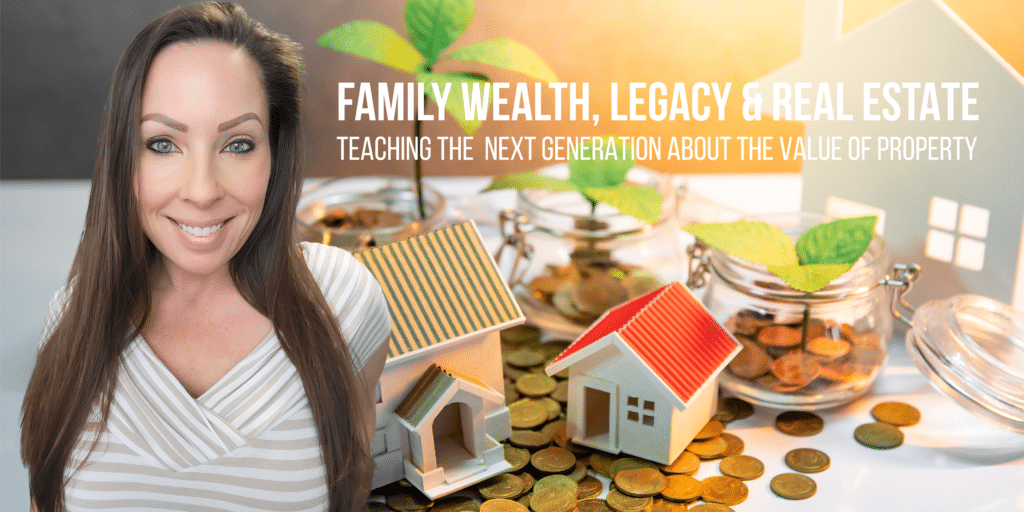
Teaching The Next Generation About The Value Of Property
Most parents don’t set out to raise real estate investors.
They set out to raise good humans.
Resilient kids.
Children who understand effort, responsibility, and the value of building something meaningful.
But somewhere along the way, between rising costs, financial complexity, and a world that feels less predictable, many families are starting to ask a deeper question:
How do we set our kids up not just to earn… but to understand wealth?
That’s where real estate quietly becomes one of the most powerful teaching tools available.
Not as a get-rich-quick strategy.
Not as dinner-table bragging rights.
But as a framework for understanding money, patience, leverage, risk, and legacy.
Why “Legacy” Is About More Than Money
When people hear the word legacy, they often think of inheritance.
Properties passed down.
Trusts.
Portfolios.
But real legacy starts much earlier, in the conversations kids overhear, the questions they’re allowed to ask, and the examples they watch their parents live out.
Real estate is uniquely positioned here because it’s tangible.
Kids can see a house.
Walk through it.
Understand that someone lives there.
That rent comes in.
That repairs cost money.
That time matters.
Unlike stocks or abstract investments, property creates visible cause and effect and that’s where learning sticks.
The Canadian Reality: Why This Matters More Than Ever
Let’s be honest about the backdrop our kids are growing up in.
Canadian housing affordability has changed dramatically in one generation. Many parents today bought their first home in a market that no longer exists.
According to data from Canadian Real Estate Association, price growth over the past 20 years has significantly outpaced wage growth in most major Canadian markets.
That reality creates two paths:
- Leave the next generation to figure it out on their own
- Proactively teach them how the system works
The families who choose the second path aren’t guaranteeing outcomes — but they are giving their kids literacy, context, and confidence.
And that matters.
Real Estate as a Classroom (Without Turning It Into a Lecture)
Teaching kids about property doesn’t mean handing them spreadsheets at age ten.
It means:
- Letting them sit in on conversations (age-appropriate ones)
- Explaining why you bought this property instead of that one
- Talking openly about repairs, vacancies, and cash flow
- Showing that wealth is built through decisions, not luck
Some of the most powerful lessons come from everyday moments:
- Walking a property before closing
- Talking about why a tenant moved out
- Explaining why you didn’t overpay even when emotions were high
These moments quietly plant seeds.
From “Home” to “Asset”: Expanding the Lens
For many families, the primary residence is the only real estate conversation that ever happens.
But teaching kids that property can be both home and asset expands their worldview dramatically.
It introduces concepts like:
- Ownership vs. consumption
- Long-term thinking
- Delayed gratification
- Stewardship
This doesn’t mean every child needs to become a landlord.
It means they grow up understanding that assets can work with you not just something you exchange time for money to maintain.
Age-Appropriate Ways to Teach Real Estate Concepts
One of the biggest misconceptions is that kids are “too young” to understand wealth.
They aren’t.
They just need it framed correctly.
Younger Kids
- “This house helps pay for school / vacations / family experiences.”
- “When people live here, they pay rent and we take care of the home.”
- “Fixing things costs money, so we plan ahead.”
Teens
- Introduce ideas like mortgages, leverage, and cash flow
- Show them real numbers (simplified)
- Talk about opportunity cost and risk
Young Adults
- Walk through a purchase or refinance
- Discuss market cycles and timing
- Involve them in decisions, even as observers
The goal isn’t mastery — it’s familiarity.
Legacy Isn’t Just What You Leave. It’s What You Teach
Here’s the uncomfortable truth:
Many families pass down assets without passing down understanding.
And that’s why generational wealth often disappears by the second or third generation.
Real estate changes that equation when education comes first.
When kids understand:
- Why properties were acquired
- How debt was managed
- What mistakes were made
- What discipline looked like
They inherit more than buildings.
They inherit judgment.
Real Estate as a Values Conversation
Property ownership naturally opens the door to bigger conversations:
- Responsibility to tenants
- Ethics in pricing and maintenance
- Long-term thinking vs. short-term gain
- Community impact
These are values-based lessons, not financial ones.
They teach kids that wealth isn’t just accumulation; it’s stewardship.
And that framing matters deeply for the kind of adults they become.
What Legacy-Focused Families Do Differently
Families who successfully integrate real estate into generational planning tend to share a few traits:
- They talk openly about money (without shame or secrecy)
- They explain decisions, not just outcomes
- They normalize patience over instant gratification
- They treat mistakes as education, not failure
They don’t expect perfection.
They expect participation.
The Emotional Side of Legacy (That Rarely Gets Talked About)
Here’s the part no one puts in spreadsheets.
For many parents, real estate isn’t just about return on investment, it’s about return on time.
It’s about:
- More flexibility
- More presence
- More choice
And kids notice that.
They notice when parents are less stressed.
When experiences matter more than things.
When work supports life, not the other way around.
That’s legacy in motion.
Looking Ahead: Preparing the Next Generation for a Different Market
The market our kids will inherit won’t look like today’s, just as today’s doesn’t look like our parents’.
Teaching them how to think about real estate is far more valuable than teaching them what to buy.
Cycles will change.
Policies will shift.
Markets will rise and fall.
But understanding fundamentals endures.
The Quiet Power of Example
The most powerful real estate lesson you’ll ever teach your kids isn’t verbal.
It’s lived.
It’s how you handle pressure.
How you avoid emotional decisions.
How you plan long-term.
How you recover from mistakes.
Real estate simply becomes the medium through which those lessons are transmitted.
And years from now, long after deals are forgotten, that is what legacy really looks like.
Let’s build wealth the smart way, together!
And, if you’re thinking about buying, selling or investing in Durham Region or Toronto, let’s chat! I can be reached at 647-896.6584, by email at info@serenaholmesrealtor.com or by filling out this simple contact form. You can also kick off your search for Durham Region homes for sale by clicking here.
In addition, make sure we’re connected on social and you’ve subscribed to my YouTube Channel. And, for other articles specific to real estate investing, click here.