

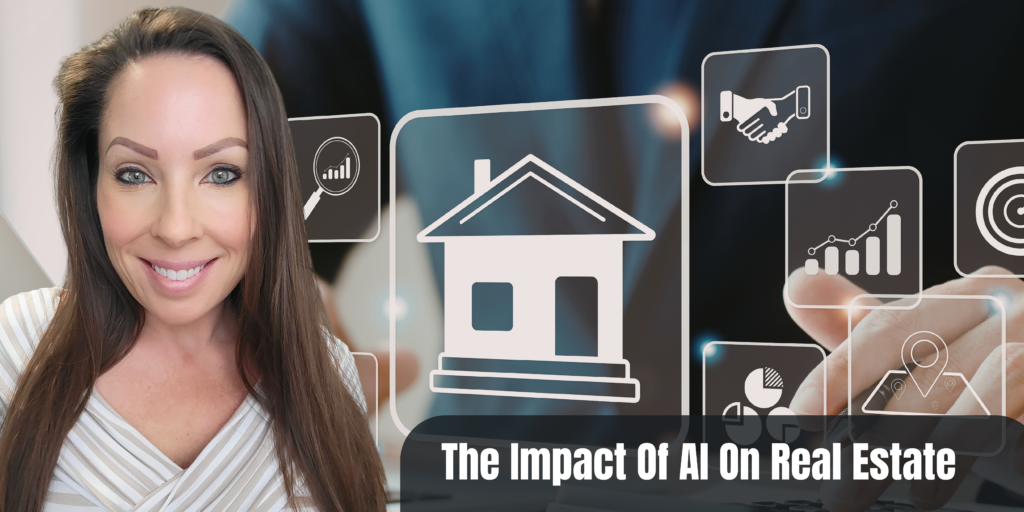
The AI Powered Realtor & The Influence Of AI
There’s a major shift happening in real estate right now — and most people still underestimate how significant it is.
Artificial intelligence is no longer some futuristic concept reserved for Silicon Valley tech companies. It’s already reshaping how homes are marketed, how deals are analyzed, how investors make decisions, and how real estate professionals build relationships and grow their businesses.
And honestly? We’re still early.
Most people think AI is just about writing captions with ChatGPT or creating funny images online. But beneath the surface, AI is quietly becoming one of the biggest technological disruptions the real estate industry has seen in decades.
The interesting part is that AI probably won’t replace great realtors or investors.
But the people who learn how to leverage AI effectively may absolutely outperform those who ignore it.
Real Estate Has Traditionally Been Slow To Adapt
Historically, real estate has lagged behind other industries when it comes to technology adoption.
For years, the business was heavily relationship-driven, paperwork-heavy, and dependent on manual systems. Many processes remained surprisingly inefficient:
- endless email chains
- repetitive admin tasks
- outdated CRMs
- inconsistent follow-up
- manual data analysis
- fragmented communication
The industry still relied heavily on human labour to manage systems that technology can now streamline dramatically.
Then AI arrived.
And unlike previous tech trends, AI isn’t just improving one small aspect of the business. It’s touching almost every part of the real estate ecosystem simultaneously.
AI Is Changing How Buyers Search for Homes
The home search process is evolving quickly.
Traditional search filters are becoming less important as AI-powered platforms improve at understanding buyer behaviour, preferences, and intent.
Instead of simply filtering:
- price
- bedrooms
- bathrooms
- postal codes
AI systems are increasingly learning how buyers actually think.
For example, buyers may soon search for homes using prompts like:
- “Find me a family-friendly neighbourhood near good schools with strong future appreciation potential.”
- “Show me homes with layouts ideal for multigenerational living.”
- “Find properties with renovation upside under $1 million in areas likely to gentrify.”
That’s a very different experience from scrolling endless listings manually.
AI recommendation engines are becoming smarter at predicting what buyers may want before they fully realize it themselves.
And over time, consumers will expect faster, more personalized experiences across every stage of the buying journey.
AI Is Transforming Property Marketing
This is where things are already moving incredibly fast.
AI tools can now help generate:
- listing descriptions
- social media captions
- video scripts
- virtual staging
- property renderings
- neighbourhood insights
- email campaigns
- ad copy
- SEO optimization
- market reports
But the real advantage isn’t simply speed.
It’s scale.
One realtor can now create the type of marketing output that previously required an entire team of writers, editors, designers, and assistants.
We’re also seeing major improvements in visual marketing.
AI-powered virtual staging has become dramatically more realistic and affordable. Empty properties can now be transformed digitally within minutes, helping buyers emotionally connect to spaces much more effectively online.
Some platforms are even allowing buyers to visualize:
- renovation concepts
- furniture layouts
- paint colours
- landscaping upgrades
- kitchen remodels
before ever stepping inside a property.
That’s powerful because real estate has always been emotional.
And AI is becoming increasingly good at helping buyers imagine possibility.
Investors Are Using AI To Analyze Deals Faster
One of the biggest impacts AI may have long term is on investment analysis.
Traditionally, evaluating deals required significant manual work:
- researching comparable sales
- analyzing neighbourhood trends
- reviewing rental data
- calculating cash flow
- stress-testing assumptions
- studying economic indicators
AI can now assist with much of this analysis at incredible speed.
Investors are already using AI-driven tools to:
- identify emerging neighbourhoods
- forecast rental demand
- analyze market trends
- compare investment opportunities
- evaluate short-term rental viability
- model financing scenarios
- assess renovation ROI
This doesn’t mean AI is always correct.
In fact, relying blindly on AI can be dangerous because real estate remains hyperlocal and influenced by human behaviour, politics, economic cycles, and emotion.
But AI dramatically improves efficiency.
It allows investors to process more information faster and potentially identify opportunities before the broader market catches on.
And in investing, speed and information asymmetry matter.
AI Will Likely Reshape Lead Generation
This may be one of the most disruptive shifts for the real estate industry over the next five years.
Many agents still rely heavily on outdated lead generation methods:
- cold calling
- door knocking
- generic newsletters
- templated drip campaigns
Meanwhile, AI is enabling much more personalized communication at scale.
Businesses can now:
- segment audiences more intelligently
- personalize follow-up automatically
- predict customer intent
- automate repetitive communication
- create highly targeted content
- respond to inquiries instantly
AI chat systems are already becoming surprisingly sophisticated at handling initial client conversations, answering common questions, and qualifying leads before a human ever becomes involved.
And consumers increasingly expect instant responses.
The real estate professionals who embrace these tools strategically will likely create a major competitive advantage.
The Human Advantage Will Become Even More Valuable
Ironically, as AI becomes more common, human connection may actually become more important — not less.
Because while AI is exceptional at processing information, automation, and efficiency, it still struggles with things that matter deeply in real estate:
- emotional intelligence
- trust
- negotiation nuance
- empathy
- intuition
- relationship building
- reading human behaviour
Buying or selling a home is rarely just a financial transaction.
It often involves:
- fear
- stress
- excitement
- identity
- family decisions
- lifestyle transitions
- uncertainty
People still want guidance during emotional moments.
They want reassurance. They want confidence. They want someone who understands the stakes involved.
That’s why I don’t believe AI replaces great realtors.
I believe it raises the standard.
The agents who survive and thrive will likely be the ones who combine:
- technology
- marketing
- efficiency
- education
- emotional intelligence
- authenticity
into a stronger overall client experience.
The Industry Divide Is Already Beginning
One thing becoming increasingly clear is that AI is creating a growing gap between:
- people adapting quickly
and - people resisting change
This pattern happens during every major technological shift.
Some people dismissed:
- the internet
- social media
- smartphones
- online marketing
- video content
And eventually, many were forced to catch up.
AI feels very similar.
The real estate professionals experimenting with AI today are learning skills and systems that may become industry standards over the next decade.
Meanwhile, others are still debating whether AI matters at all.
That gap could become significant.
The Future Is HERE
AI is not some distant future concept anymore. It’s already transforming real estate in ways many consumers — and even many industry professionals, don’t fully realize yet.
From marketing and lead generation to investment analysis and customer experience, the industry is evolving rapidly.
But perhaps the most important takeaway is this:
Technology alone will not create trust.
In a world flooded with automation, content, and AI-generated noise, authenticity may become one of the most valuable currencies in business.
The future likely belongs to professionals who know how to leverage AI without losing the human connection that real estate has always been built on.
And honestly, that combination may become incredibly powerful.
Let’s build wealth the smart way, together!
And, if you’re thinking about buying, selling or investing in Durham Region or Toronto, let’s chat! I can be reached at 647-896.6584, by email at info@serenaholmesrealtor.com or by filling out this simple contact form.
In addition, make sure we’re connected on social and you’ve subscribed to my YouTube Channel. And, for other articles specific to real estate investing, click here.